How to store and protect trading cards: sleeves, toploaders, binders and grading basics
A practical guide to keeping Pokémon, Magic, sports and other cards in good condition — what each accessory is for, and when grading makes sense.
We choose what to recommend on our own; no brand or store reviews our articles before they go live. Some outbound links are affiliate links, which support this site at no cost to you. How we earn.
Short version. Put any card you care about in a soft "penny" sleeve first. Valuable cards then go into a toploader (rigid holder) or a quality side-loading binder. Store everything flat, dry and out of sunlight. Grading is worth it only for cards that are both valuable and in excellent condition.
A card's value depends enormously on its condition. A tiny dent, a bent corner or a scratch on the surface can cut what a rare card is worth by a large margin. Fortunately, protecting cards is cheap.
The protection layers
1. Penny sleeves (soft sleeves). Thin, clear plastic sleeves. The minimum protection for any card worth keeping. They prevent scratches and fingerprints.
2. Deck sleeves (playing sleeves). Thicker, often colored sleeves used for cards in a deck that gets played. Standard-size cards (Pokémon, Magic) use standard sleeves; smaller Japanese-size cards (Yu-Gi-Oh!, Japanese Pokémon) need smaller ones. Check the size on the pack.
3. Toploaders. Rigid plastic holders. Slide a sleeved card in. The most common thickness for standard cards is 35pt. They're ideal for valuable single cards and for mailing.
4. Semi-rigid holders. Slightly flexible holders that grading companies often prefer for submissions.
5. Magnetic one-touch cases. Hard cases that close with magnets, for display.
Binders
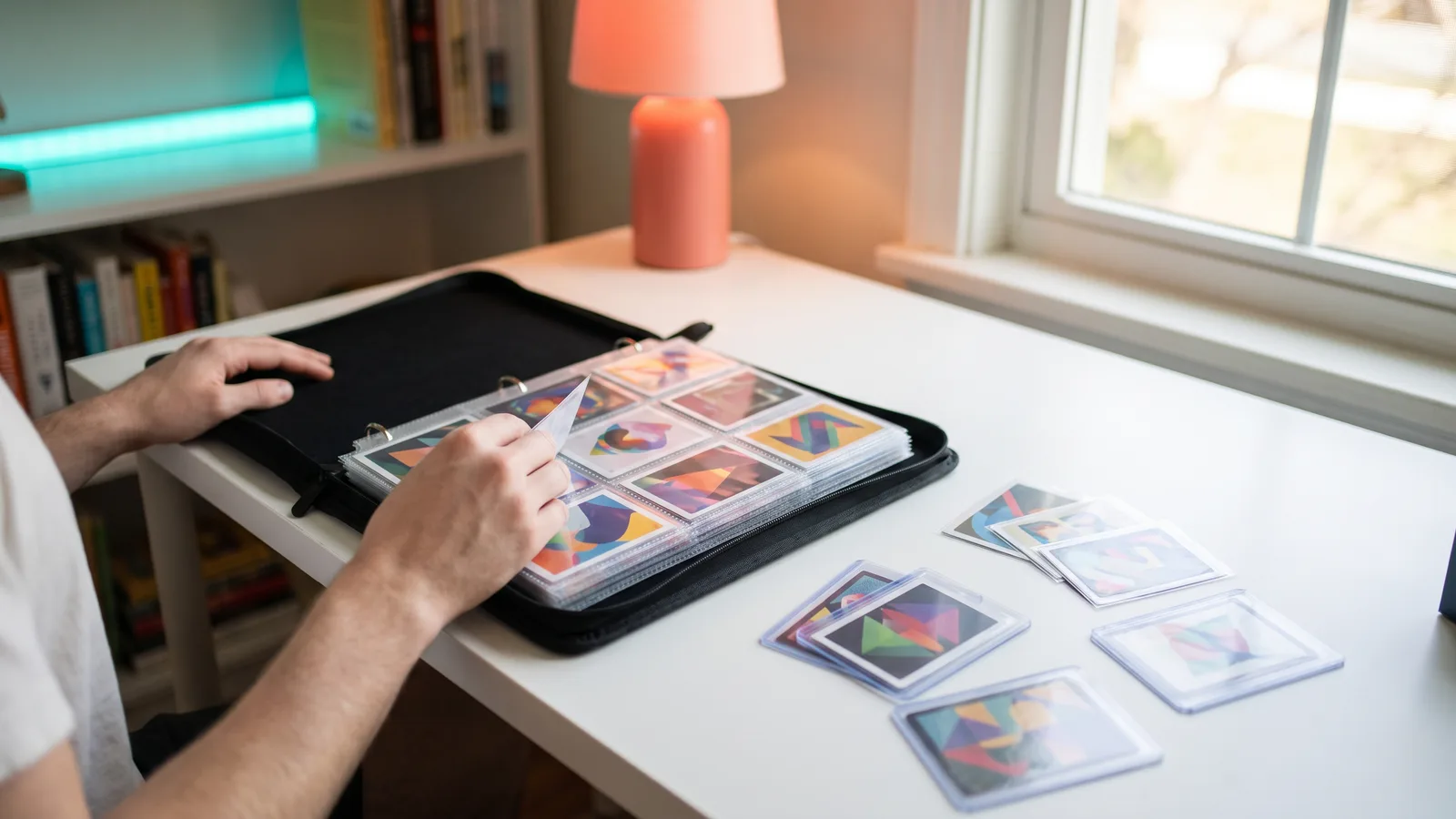
Binders are the best way to store and enjoy a collection. Look for:
- Side-loading pockets, so cards don't slide out.
- Acid-free, PVC-free plastic. Cheap PVC pages can damage cards over time.
- Zip or strap closure to keep dust out.
- The right page size — 9-pocket pages are standard; 4-pocket binders suit smaller collections.
Avoid ring binders for valuable cards: cards near the rings can be pressed and dented.
Boxes
For bulk cards, storage boxes sized for trading cards are cheap and effective. Keep them upright and full enough that cards don't slide around.
What damages cards
- Rubber bands — they dent edges.
- Humidity and heat — cards warp. Avoid attics, garages and cars.
- Sunlight — fades colors.
- Shuffling without sleeves — wears edges quickly.
Grading, briefly
Grading companies such as PSA, Beckett (BGS) and CGC inspect a card, assign it a condition grade (usually 1 to 10), and seal it in a tamper-evident case. A high grade can make a rare card worth much more.
Grading costs money and takes time, so it makes sense only when:
- The card is genuinely valuable, and
- It's in excellent condition — centered, with sharp corners, clean edges and an unscratched surface.
For most cards in most collections, a sleeve and a binder are all you need.
Gift ideas for collectors
A quality side-loading binder
The single most useful accessory for any collector. Choose a size that matches their collection.
Penny sleeves and toploaders
Every collector runs out. Cheap, practical and always used.
Deck sleeves and a deck box
For players. Match the size to their game: standard for Pokémon and Magic.
Browse trading card accessories
Facts, prices and policies in this article were checked in November 2026. Prices, bundles and store rules change often — always confirm on the product page before you buy. Spotted something out of date? Tell us.